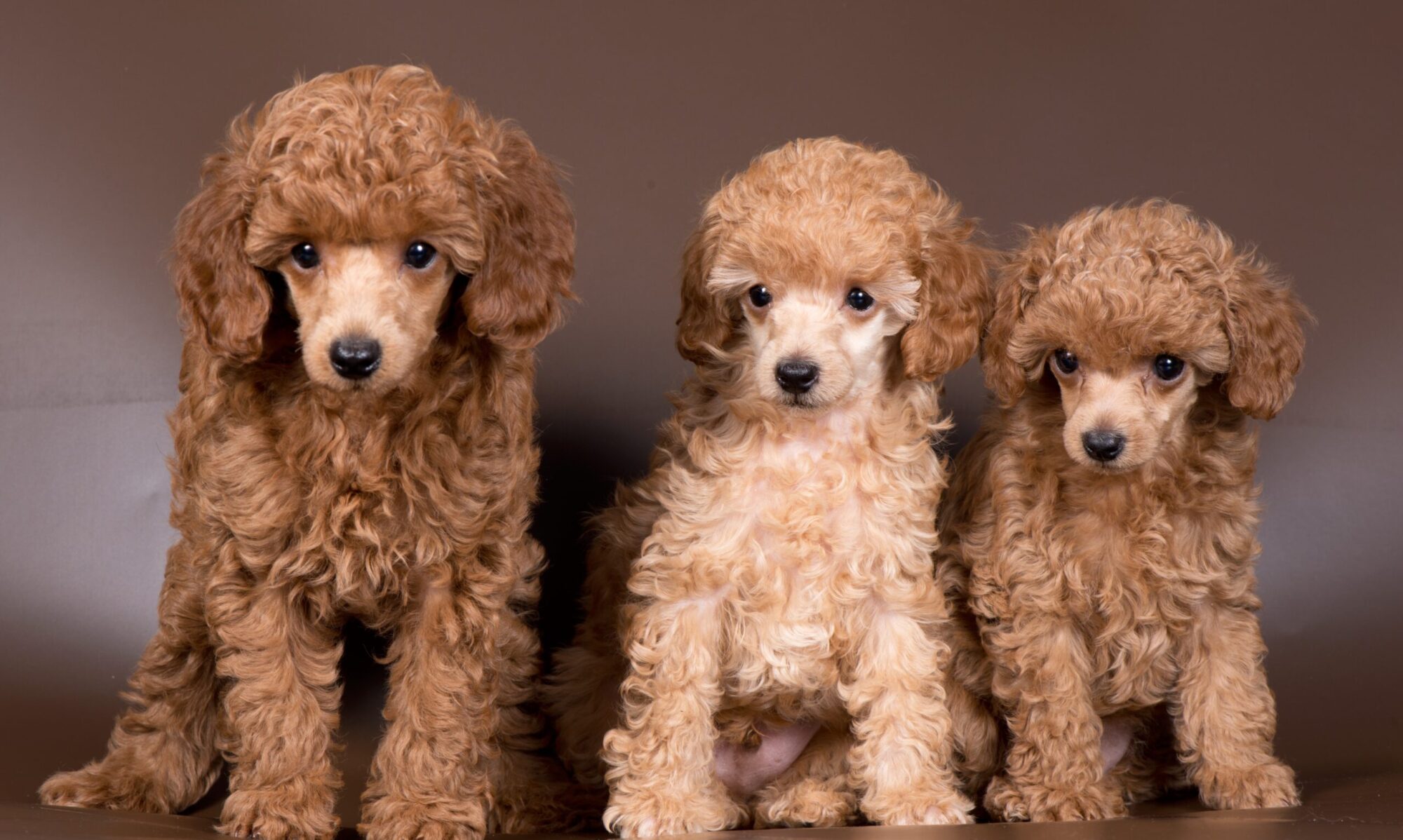
The History of the Miniature Poodle
The Miniature Poodle is one of the oldest and most versatile purebred dog breeds in the world. While many people today picture Poodles as fancy show dogs with extravagant clips, the breed actually began as an athletic working dog bred for retrieving waterfowl.
The Poodle is believed to have originated in Germany, where the breed was known as the “Pudel,” meaning “to splash in water.” Fitting, as both myself and my husband were born and raised in Germany!
The French later refined and popularized the breed, which is why Poodles are so strongly associated with France today. In fact, the French fell so deeply in love with the breed that the Poodle eventually became the national dog of France.
Originally, Standard Poodles were used as water retrievers. Their intelligence, athleticism, and water-resistant curly coat made them exceptional working dogs. Over time, breeders began selectively breeding smaller versions of the Standard Poodle, resulting in the Miniature Poodle. These smaller dogs quickly became popular because they retained the intelligence and trainability of the Standard while fitting more easily into city and family life.
Miniature Poodles were often used for truffle hunting, companionship, performing, and obedience work. Even centuries later, they continue to excel in sports, therapy work, service work, obedience, agility, and as loyal family companions.
Today, the Miniature Poodle is recognized worldwide as one of the most intelligent dog breeds. They are highly trainable, eager to please, affectionate with their families, and incredibly adaptable when properly exercised and socialized.
Temperament & Personality
Miniature Poodles are much more than their appearance. Behind the curls is an incredibly intelligent and sensitive dog that thrives on human companionship.
They are known for being:
- Extremely intelligent and quick learners
- Loyal and deeply bonded to their families
- Athletic and versatile
- Fun-loving and playful
- Highly trainable
- Alert and intuitive
Poodles tend to be emotionally in tune with their people and do best when raised as part of the family. They are not a breed that enjoys being ignored in the backyard all day. They want involvement, stimulation, and companionship.
Despite their elegant appearance, Miniature Poodles are active little dogs that enjoy hiking, training, playing, and learning new things. They excel when given both physical and mental stimulation.
Grooming & Coat
One of the most recognizable features of the Poodle is its curly, low-shedding coat. While no dog is truly “hypoallergenic,” many allergy sufferers tolerate Poodles better than heavy shedding breeds.
Their coat does require consistent maintenance. Routine brushing (best to be done daily) and professional grooming every 6–8 weeks is important to keep the coat healthy and mat-free.
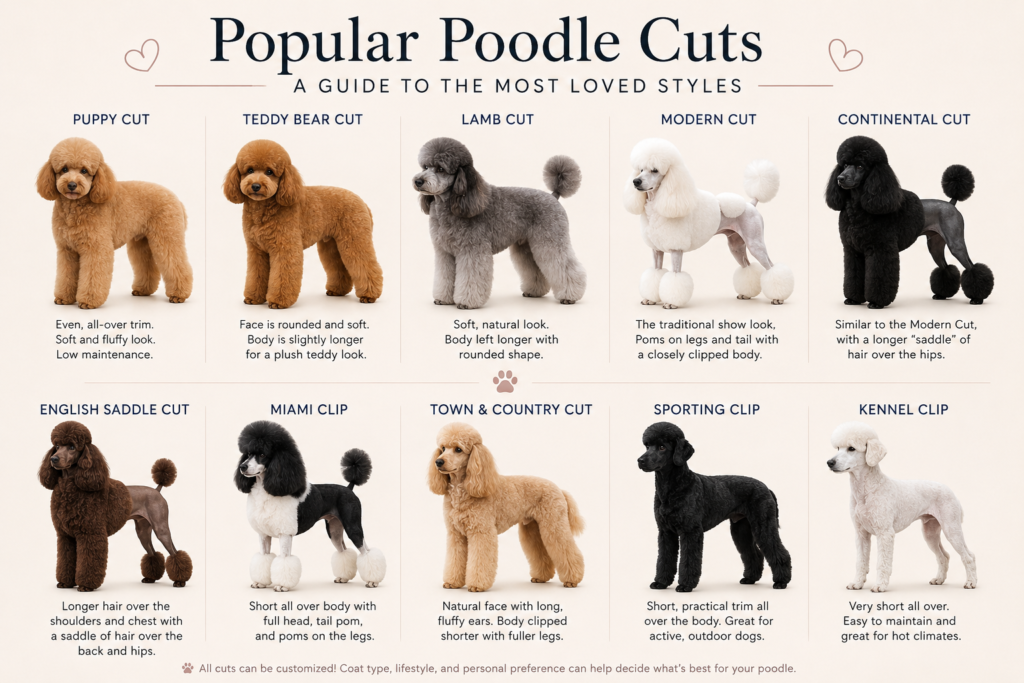
The famous “show clips” were originally functional, not just decorative. Hunters would shave certain areas to improve swimming ability while leaving pom-poms around joints and organs for warmth and protection in cold water.
There are now so many different cuts and coat colors. Here are a few:
Health & Ethical Breeding
Responsible breeding matters deeply in preserving the future of the Miniature Poodle.
Ethically bred Poodles should come from health-tested parents with proper genetic screening and careful temperament evaluation. A good breeder focuses on structure, temperament, longevity, and preserving the breed standard — not simply producing puppies for profit or trendy colors.
At our program, we believe in preserving the integrity of the purebred Miniature Poodle through responsible breeding practices, proper socialization, and health testing. We put high focus in the health and temperament of our dogs.
Why We Do NOT Breed Doodles
One thing we feel strongly about is preserving the integrity of purebred dogs — especially the Miniature Poodle.
While doodles have become extremely popular in recent years, we personally do not support intentionally crossing Poodles with other breeds to create designer mixes. Because of this, we will never breed doodles in our program.
This is not meant as hate toward people who own or love doodles. Many are wonderful pets. However, we believe there is a major difference between responsibly preserving a purebred breed and producing mixed breeds for trends or marketing.
One of the biggest misconceptions is that doodles are automatically healthier, more hypoallergenic, or easier to care for. In reality, genetics simply do not work that way. Coat type, shedding, temperament, size, and health can vary dramatically in mixed breed litters. Research has recently shown that doodle breeds are more likely to develop behavioral problems. Sadly they often don’t inherit the best of both breeds, but the worst of both breeds.
We believe Miniature Poodles already possess many of the traits people are searching for in doodles:
- Intelligence
- Athleticism
- Trainability
- Low-shedding coats
- Family-friendly temperaments
- Versatility
Sometimes, it is all about the haircut. For us, preserving and improving the purebred Miniature Poodle is far more important than following trends.
We are passionate about producing well-bred, health-tested, structurally sound Miniature Poodles that honor the history and purpose of this incredible breed.